"We sent photos before the appointment, and it helped. The fixture installation visit focused on valve access, the Morrison Ranch access route, and the local concern around heat pump sizing instead of guessing from the service label alone. That made the final recommendation useful because the technician explained what was safe to use and what needed to stay off."
Curated local service brief
Culver City emergency electrical repair for partial power and unsafe circuits.
Emergency electrical repair in Culver City should focus on safety first: burning odor, sparking, wet equipment, partial power, failed breakers, damaged outlets, and circuits affected by remodels or dense multifamily use.
This page helps owners decide what to shut off, what to photograph, and what information makes an urgent visit more useful without inventing a diagnosis over the phone.
Fast answer
Emergency Electrical Repair in Culver City: what decides the visit.
First checkhazard, affected circuit, panel
Local frictionmultifamily access and parking
Decision pointstabilize or repair now
Owner prepphotos from a safe distance
Culver City addresses require provider verification; SoCalGas is common for gas appliances and LADWP/SCE boundaries can be nearby. Culver City has its own permit path, which should be confirmed before replacements and remodel-related work.
Safety order
The first decision is whether the area should stay energized.
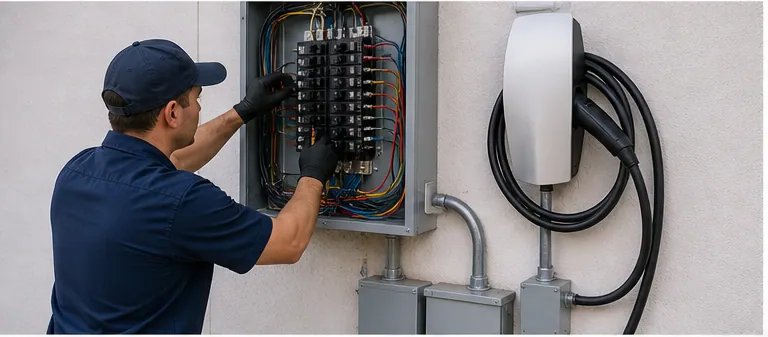
Burning smell, visible arcing, hot devices, wet outlets, damaged panels, and repeated breaker trips should be treated as safety problems before convenience problems. If it is safe to do so, the affected circuit can be shut off. If the panel itself is involved, the owner should step back and wait for qualified help.
The booking note should describe what changed first: smell, sound, lights flickering, appliance failure, power loss, water exposure, or a breaker that will not reset. That sequence helps the technician prioritize safe stabilization.
Partial power
Partial outages can involve the utility or the home.
Some partial-power symptoms come from utility issues, while others come from service equipment, damaged conductors, loose connections, or overloaded circuits. The visit should identify whether neighbors are affected, whether only part of the home is out, and whether the panel shows heat, corrosion, water, or tripped mains.
A good emergency response does not promise full repair before inspection. It first determines what can be safely energized and what must remain off until parts, utility coordination, or permit work is complete.
Dense access
Culver City buildings can add parking and manager constraints.
Apartments, condos, small lots, and mixed-use properties may involve shared panels, locked electrical rooms, manager approval, and limited parking. Emergency notes should include who can provide access and whether tenants, pets, elevators, or work-hour rules affect the visit.
If water intrusion is part of the problem, the electrical repair may need to coordinate with plumbing or restoration. The electrician should state what is safe now and what follow-up is outside the immediate repair.
Repair boundary
Stabilization and permanent correction are different tasks.
An emergency visit may isolate a circuit, replace a failed device, repair a connection, or make the area safe. Permanent correction may require new wiring, a panel repair, permits, utility work, wall opening, or appliance replacement. Mixing those phases can confuse the owner.
The closeout should say what was shut off, what was repaired, what remains unsafe, and what must happen before the circuit is used normally.
Before booking
Information to gather without taking risks.
Take photos only from a safe position: panel, tripped breaker, damaged outlet, affected room, and any water source nearby. Do not touch wet electrical equipment or keep resetting a breaker that trips immediately.
Ask the technician to identify the hazard, the affected circuit, the temporary safety step, and the permanent repair path. That keeps the emergency visit clear and defensible.
Culver City field notes
Neighborhood-level cues for this long-tail visit.
Culver West field note: The first decision is whether the area should stay energized. This matters when access and safety controls is visible at the same time as heat pump placement. The appointment should treat "Partial power after outage" as the clue that decides the first test, not as a generic label.
Culver West owner prep: photograph the route connected to access and safety controls, then add a short note about heat pump placement. For emergency electrical repair, that local combination helps the technician decide whether the first visit should prioritize diagnosis, stabilization, replacement planning, or permit-aware follow-up.
Carlson Park field note: Partial outages can involve the utility or the home. This matters when emergency timing is visible at the same time as EV chargers. The appointment should treat "Sparking or arcing" as the clue that decides the first test, not as a generic label.
Carlson Park owner prep: photograph the route connected to emergency timing, then add a short note about EV chargers. For emergency electrical repair, that local combination helps the technician decide whether the first visit should prioritize diagnosis, stabilization, replacement planning, or permit-aware follow-up.
Veterans Park field note: Culver City buildings can add parking and manager constraints. This matters when damage extent is visible at the same time as drain backups. The appointment should treat "Burning odor" as the clue that decides the first test, not as a generic label.
Veterans Park owner prep: photograph the route connected to damage extent, then add a short note about drain backups. For emergency electrical repair, that local combination helps the technician decide whether the first visit should prioritize diagnosis, stabilization, replacement planning, or permit-aware follow-up.
Hayden Tract field note: Stabilization and permanent correction are different tasks. This matters when panel parts is visible at the same time as water heater upgrades. The appointment should treat "Wet panel" as the clue that decides the first test, not as a generic label.
Hayden Tract owner prep: photograph the route connected to panel parts, then add a short note about water heater upgrades. For emergency electrical repair, that local combination helps the technician decide whether the first visit should prioritize diagnosis, stabilization, replacement planning, or permit-aware follow-up.
Local risk proof
City-specific risks that change the estimate.
ADU load planning verification in Veterans Park: Apartments, condos, small lots, and mixed-use properties may involve shared panels, locked electrical rooms, manager approval, and limited parking. Emergency notes should include who can provide access and whether tenants, pets, elevators, or work-hour rules affect the visit. The written scope should connect that finding to panel parts and "Sparking or arcing" so the owner can see why this Culver City page is not interchangeable with another emergency electrical repair page.
heat pump placement verification in Hayden Tract: The closeout should say what was shut off, what was repaired, what remains unsafe, and what must happen before the circuit is used normally. The written scope should connect that finding to utility coordination and "Burning odor" so the owner can see why this Culver City page is not interchangeable with another emergency electrical repair page.
EV chargers verification in Culver West: Take photos only from a safe position: panel, tripped breaker, damaged outlet, affected room, and any water source nearby. Do not touch wet electrical equipment or keep resetting a breaker that trips immediately. The written scope should connect that finding to access and safety controls and "Wet panel" so the owner can see why this Culver City page is not interchangeable with another emergency electrical repair page.
drain backups verification in Carlson Park: The booking note should describe what changed first: smell, sound, lights flickering, appliance failure, power loss, water exposure, or a breaker that will not reset. That sequence helps the technician prioritize safe stabilization. The written scope should connect that finding to emergency timing and "Partial power after outage" so the owner can see why this Culver City page is not interchangeable with another emergency electrical repair page.
water heater upgrades verification in Veterans Park: Some partial-power symptoms come from utility issues, while others come from service equipment, damaged conductors, loose connections, or overloaded circuits. The visit should identify whether neighbors are affected, whether only part of the home is out, and whether the panel shows heat, corrosion, water, or tripped mains. The written scope should connect that finding to damage extent and "Sparking or arcing" so the owner can see why this Culver City page is not interchangeable with another emergency electrical repair page.
Appointment prep
What the owner should have ready.
- Do not reset a breaker repeatedly.
- Stay away from wet electrical equipment.
- Photograph the panel only if safe.
- Name the first symptom and timeline.
- Ask what must remain off after the visit.
Internal links
Route links for the next decision.
Book emergency electrical repair in Culver City.
This page helps owners decide what to shut off, what to photograph, and what information makes an urgent visit more useful without inventing a diagnosis over the phone.
FAQ
Questions homeowners ask before booking
What should I send before booking emergency electrical repair in Culver City?
Do not reset a breaker repeatedly. Stay away from wet electrical equipment. Photograph the panel only if safe. Add photos that show the actual access route, not only the failed equipment.
What usually changes the scope for this Culver City visit?
Some partial-power symptoms come from utility issues, while others come from service equipment, damaged conductors, loose connections, or overloaded circuits. The visit should identify whether neighbors are affected, whether only part of the home is out, and whether the panel shows heat, corrosion, water, or tripped mains.
When should this emergency electrical repair request become urgent?
An emergency visit may isolate a circuit, replace a failed device, repair a connection, or make the area safe. Permanent correction may require new wiring, a panel repair, permits, utility work, wall opening, or appliance replacement. Mixing those phases can confuse the owner.
Customer reviews
Verified homeowner reviews from Los Angeles HVAC, electrical, and plumbing visits.
"The estimate separated diagnosis from follow-up work, which mattered for our Reseda home. A simple ductwork and airflow request turned into a better conversation about attic access, ADU mini-splits, and access near Victory Boulevard corridor. There was no pressure, and the written scope made the repair-versus-replace decision much easier."
"The visit notes were specific enough for our property manager to understand the next decision. They named the lighting installation issue, the Whitley Terrace access limits, the dimmer compatibility concern, and the reason old wiring could affect timing. That level of detail helped because the visit avoided a second trip because the access issue was handled early."
"No coupon talk, just a clear route through the problem. The East Hollywood notes matched what the technician found on site, especially around Little Armenia, cleanout access, and shared drain backups. We had enough information to compare options because the photos and closeout notes matched what we saw at the house."
"The team treated our service request like a building problem, not only a part problem. For AC replacement, they checked how Title 24 and inspection scope connected to the rest of the system and whether ADU load planning would create a return visit near Veterans Park. The closeout was strong because the estimate separated immediate stabilization from the follow-up scope."
"The written scope named the symptom, access issue, and condition that would change pricing. That was useful for our Hidden Hills house because emergency HVAC depended on roof or attic access, and whole-home load calculations could not be ignored. After the visit, the notes gave our property manager enough detail to approve the next step."
Culver City reference set
Sources checked for this emergency electrical repair brief.
Emergency electrical repair in Culver City should focus on safety first: burning odor, sparking, wet equipment, partial power, failed breakers, damaged outlets, and circuits affected by remodels or dense multifamily use.